

Business AI Compliance: Checklist to Safely Manage AI Work and Adoption
Managing AI tools and AI work effectively means more than just adoption; it requires a clear compliance strategy to avoid risks and maximize benefits. This guide offers a practical checklist to help your business system safely incorporate AI while maintaining control over AI adoption challenges and automation like Claude AI automation. You'll learn how to oversee AI usage, manage the risks, and improve productivity with free AI and premium tools alike.
Key Takeaways
- A structured compliance checklist is essential for responsible business AI adoption.
- Clear policies reduce AI misuse and data security risks in AI work.
- Integrating compliance with automation tools like Claude AI automation increases efficiency.
- Employee training and oversight foster safe AI tool usage.
- Transparency and review mechanisms sustain trust in AI-driven workflows.
Why Business AI Compliance Matters
Businesses adopting AI tools face risks including data breaches, inaccurate outputs, and regulatory violations. Compliance ensures AI work aligns with company policies and legal requirements. It protects your data, reputation, and customers, while enabling scalable AI adoption without chaos or risk.
A strong compliance framework guides decisions about which AI tools to use — whether free AI resources or enterprise-grade solutions — and how to integrate them into your existing business system.
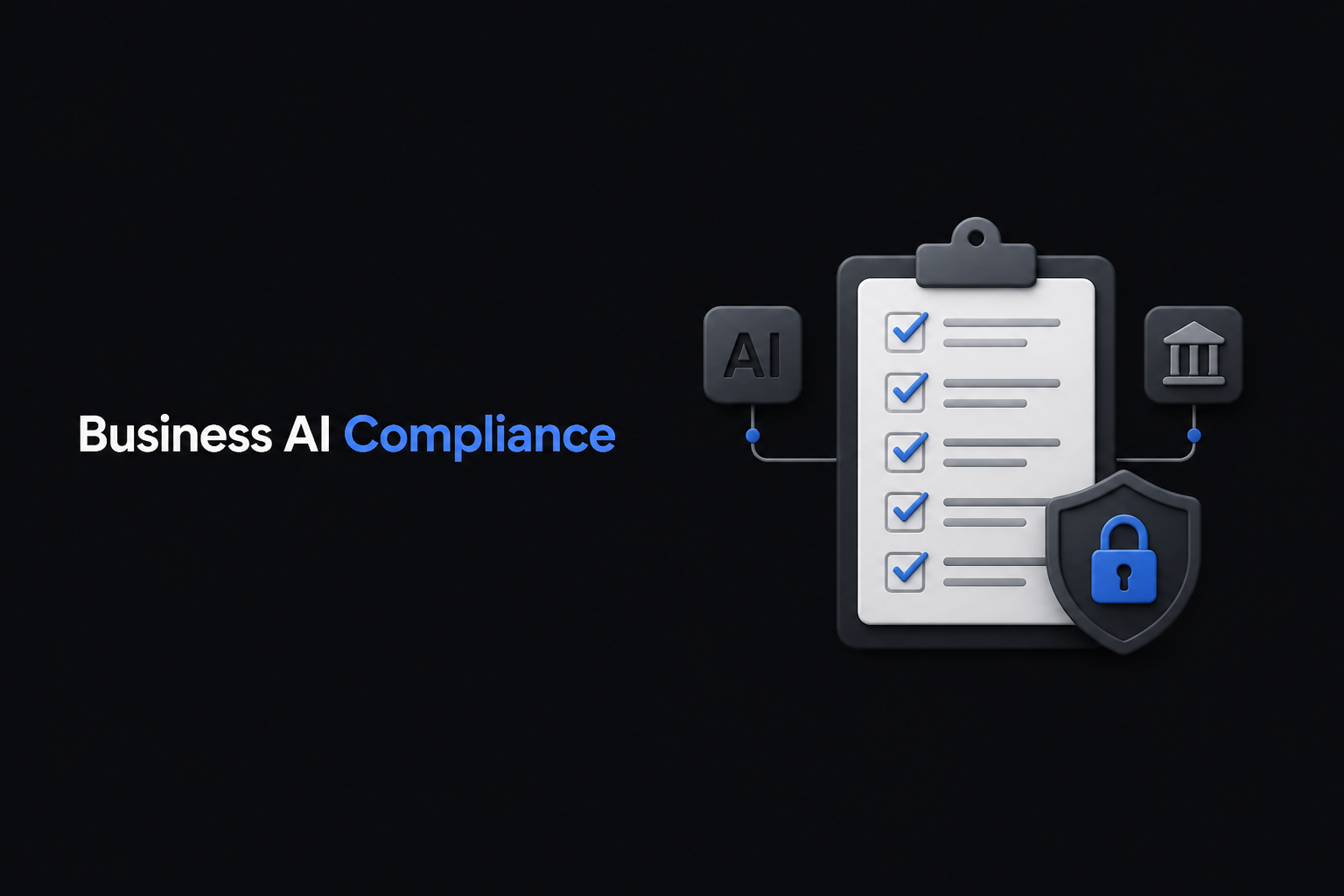
The Business AI Compliance Checklist
| Step | Description | Why It Matters |
|---|---|---|
| 1. Define AI Usage Policies | Specify acceptable AI tasks, data types, and user roles | Prevents misuse and unauthorized data exposure |
| 2. Evaluate AI Tools Security | Assess AI providers for data protection and compliance certifications | Ensures partners meet security and privacy standards |
| 3. Implement Data Governance | Set rules on data input, access, storage, and deletion in AI workflows | Protects sensitive information and complies with regulations |
| 4. Train Employees on AI Risks | Educate teams on responsible AI use, biases, and error handling | Reduces user errors and ethical risks |
| 5. Monitor AI Outputs | Regularly check AI-generated work for accuracy and compliance | Maintains quality and accountability |
| 6. Automate Compliance Reporting | Use AI automation tools like Claude AI automation for alerts and audit trails | Enables real-time oversight and faster issue resolution |
| 7. Review and Update Policies | Periodically revise AI policies based on evolving tech and regulations | Keeps compliance relevant and effective |
Controlling AI Workflows with Automation
Automation tools streamline managing AI compliance by embedding checks into AI workflows. For instance, Claude AI automation can flag unusual data use or generate compliance reports automatically. This hands-off oversight is vital as AI work scales across departments, preventing bottlenecks and manual errors.
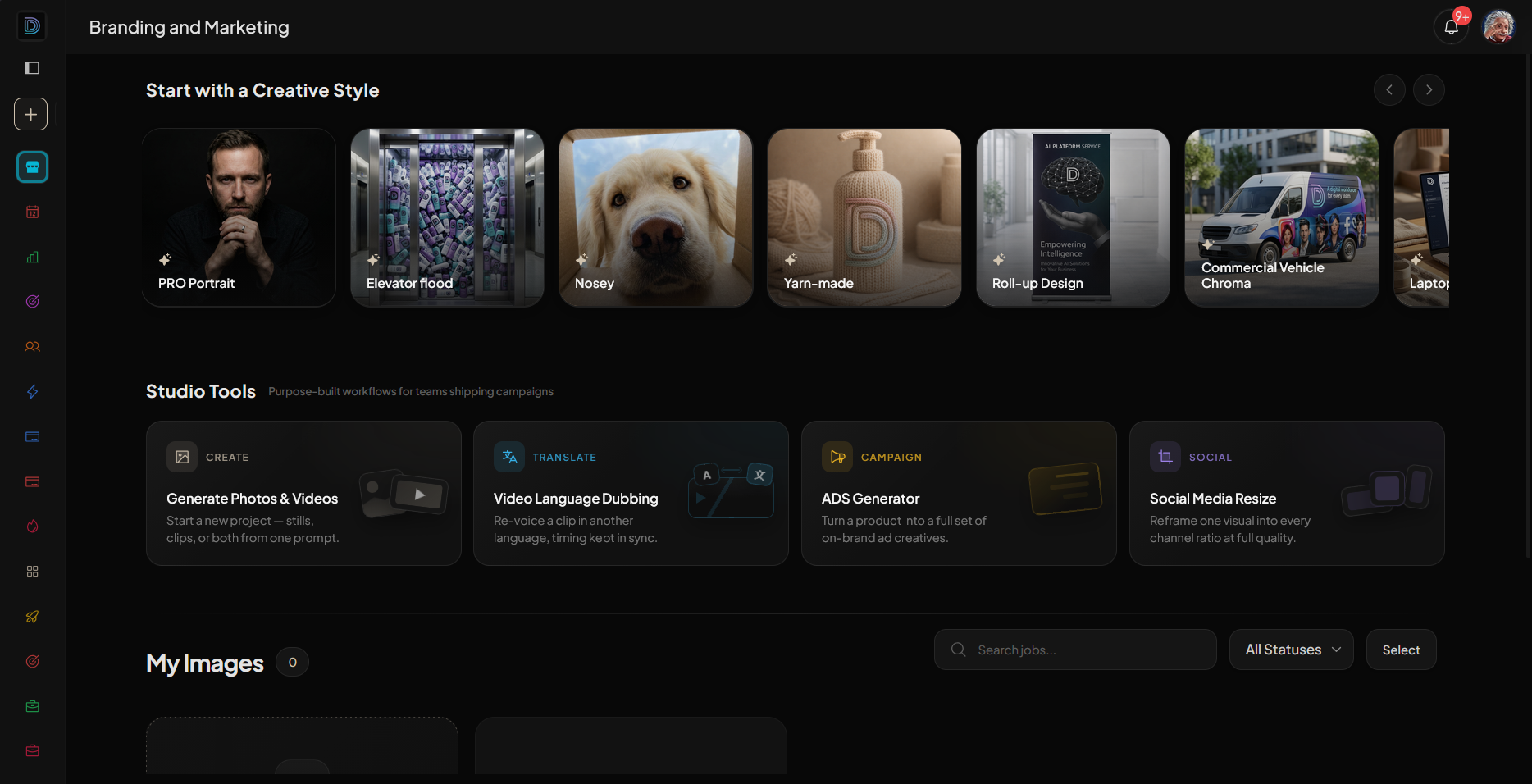
DIMA offers an all-in-one business system where you can configure automation agents, integrate multiple AI tools, and maintain human approval layers to control AI output before publishing or deployment.
Balancing Free AI and Enterprise Solutions
Free AI tools provide easy access for experimentation but often lack robust compliance features. Businesses should use free AI cautiously, applying the compliance checklist strictly, especially regarding data privacy.
Conversely, enterprise AI tools typically offer stronger security, customization, and compliance support. Incorporating both types strategically in your business system can optimize costs while maintaining control over AI adoption risks.
Building a Culture of Responsible AI Adoption
Compliance isn’t just rules—it’s culture. Encourage teams to report AI concerns, suggest improvements, and participate in ongoing training. This culture fosters trust in AI work, supports ethical AI use, and helps your business adapt quickly to AI advances.
FAQ
What is business AI compliance?
Business AI compliance involves policies and practices ensuring AI tools and workflows meet legal, ethical, and security standards within an organization.
How does Claude AI automation help with compliance?
Claude AI automation can automate monitoring tasks, generate audit trails, and enforce policy checks, reducing manual compliance workload.
Can I use free AI tools safely for business?
Yes, but with stricter controls on data handling, user training, and output monitoring to mitigate risks.
Why is employee training important for AI adoption?
Training ensures users understand AI capabilities, limitations, and risks, preventing errors and misuse.
How often should AI compliance policies be updated?
Regularly—at least annually or whenever new AI tools, regulations, or business needs emerge.
Conclusion
- Define clear AI usage policies aligned with your business goals.
- Evaluate and select AI tools, balancing free AI and premium options.
- Automate compliance monitoring with tools like Claude AI automation.
- Train employees and foster a responsible AI culture.
- Continuously review and improve your compliance framework.
Ready to take control of AI work and adoption in your business system? Try DIMA’s AI workspace for a compliant, efficient, and integrated AI management solution tailored to marketing teams and beyond.
 DIMA
DIMA