

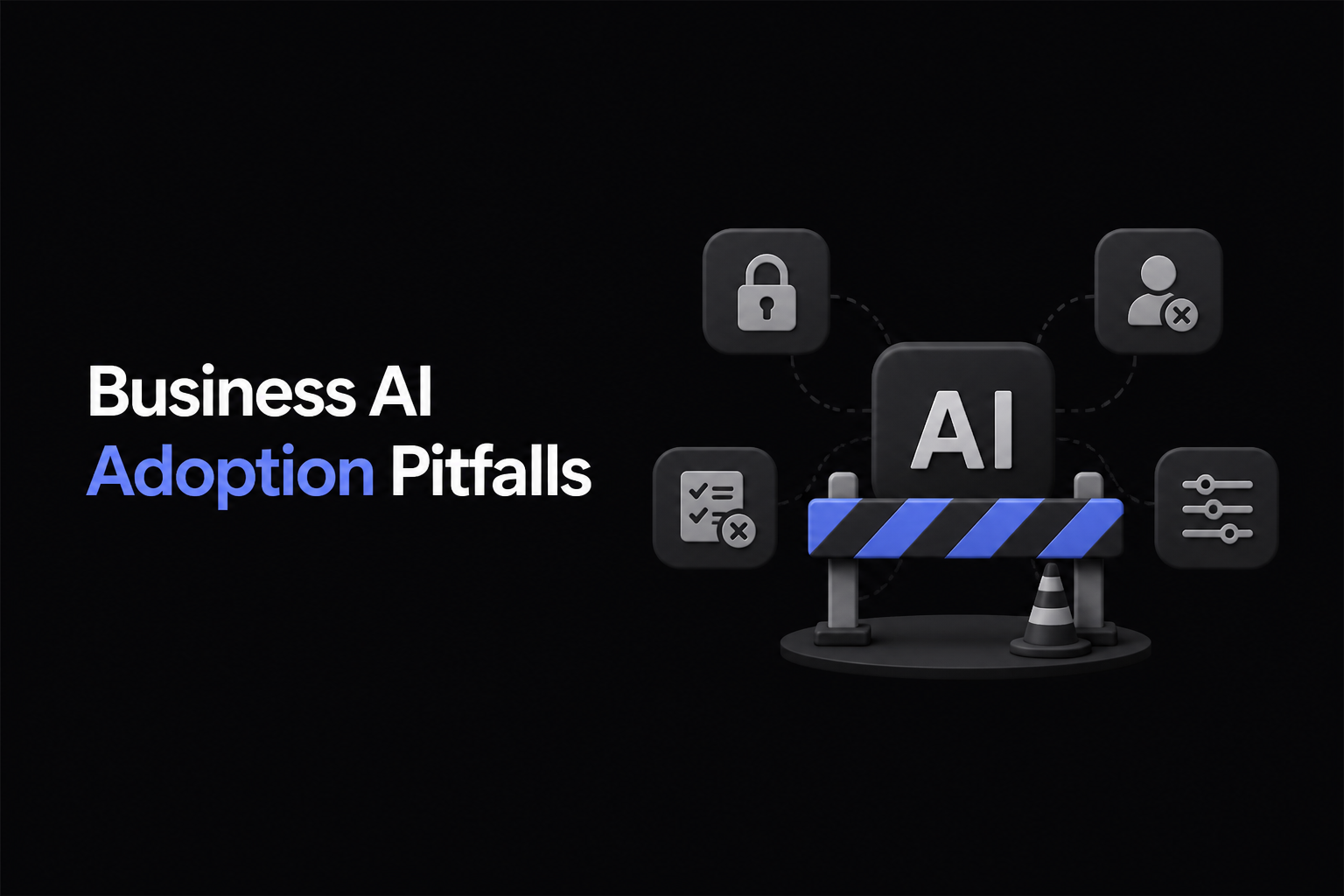
Business AI Adoption Pitfalls: 5 Control Mistakes Slowing Your AI Work
Adopting AI tools in business promises efficiency and growth, but many organizations hit snags that slow down or even reverse AI work benefits. This article outlines five common control mistakes that sabotage business AI adoption and offers practical tips to help marketing teams and business leaders regain command over their AI systems. You'll learn how to avoid costly errors, integrate free AI options wisely, and implement a business system that supports sustainable AI workflows.
Key Takeaways
- Many AI adoption failures stem from poor control and unclear workflows.
- Overusing multiple AI tools without integration causes inefficiency.
- Lack of human oversight can degrade AI work quality.
- Free AI tools require careful vetting and governance.
- A unified business system with automation ensures smooth AI integration.
- Prevent tool sprawl by centralizing AI tools.
- Maintain human oversight in AI workflows.
- Integrate AI within your overall business system.
- Govern free AI tools carefully.
- Provide training and manage change effectively.
1. Mistake: Tool Sprawl Without Centralized Control
Using multiple AI tools independently leads to fragmented workflows and wasted effort. When marketing teams adopt various free AI services or specialized AI tools without a unified platform, managing AI work becomes chaotic. This sprawl creates inconsistent outputs, duplicated tasks, and approval bottlenecks.
How to fix it: Adopt an all-in-one AI business system like DIMA that consolidates AI tools, workflows, and approvals. Centralized control improves collaboration and keeps AI adoption on track.2. Mistake: Ignoring Human Oversight in AI Workflows
AI automation, including Claude AI automation, can speed up content creation and marketing tasks, but fully removing human approval risks errors and misaligned messaging. Blind trust in AI-generated outputs may damage brand consistency.
How to fix it: Implement approval layers in your AI workflows where human experts review and refine AI content before publication. This hybrid approach balances speed with quality.3. Mistake: Deploying AI Without Clear Business System Integration
AI tools function best when integrated into your existing business systems and processes. Launching AI adoption as a siloed experiment often causes disruption rather than improvement.
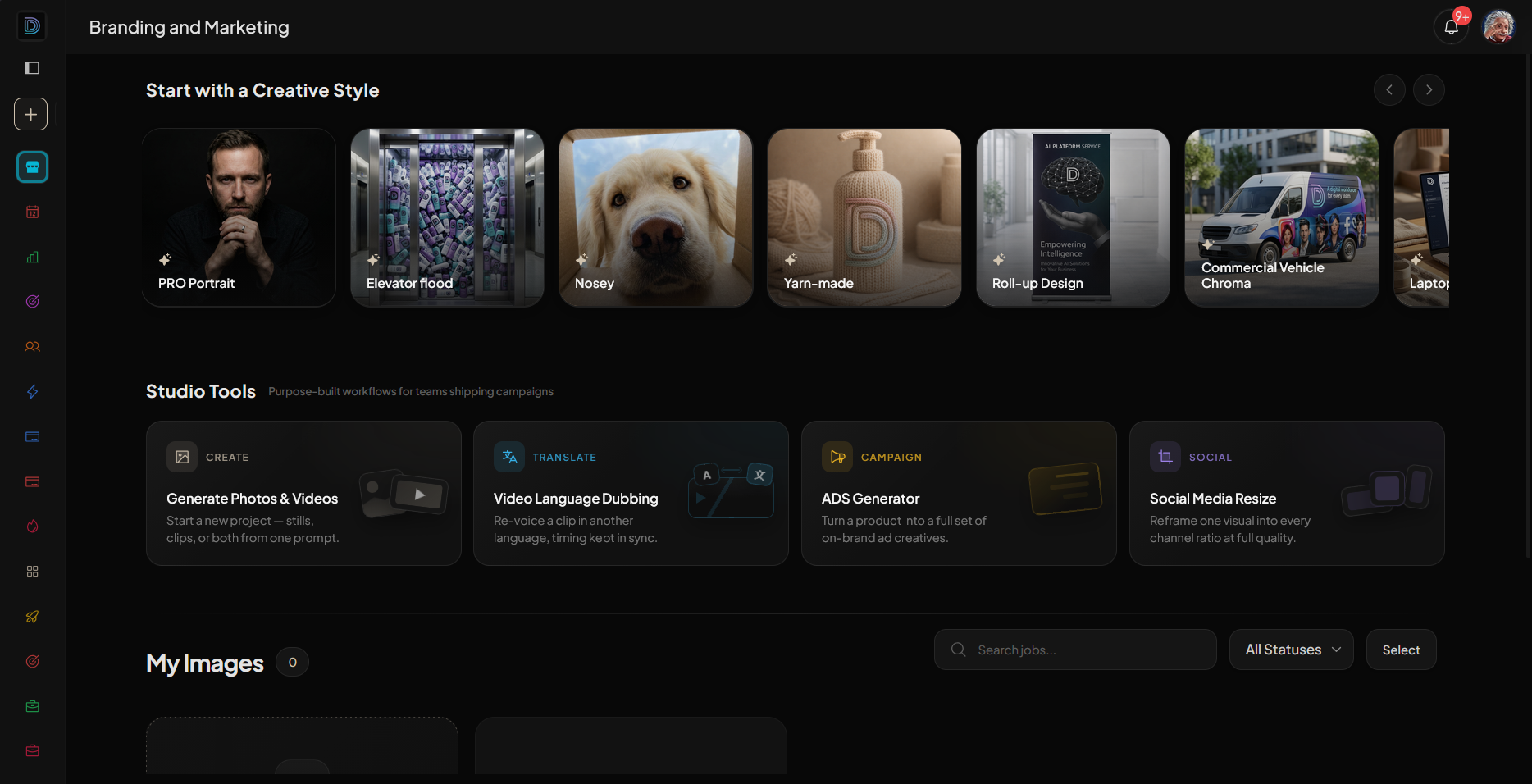
How to fix it: Plan AI adoption as part of your broader business system modernization. Tools like DIMA Media Studio offer integrated AI workspaces designed for marketing teams, ensuring AI complements your business objectives.4. Mistake: Overreliance on Free AI Without Governance
Free AI platforms provide accessible options but come with risks: limited control, data privacy concerns, and unpredictable quality. Unregulated use of free AI tools can expose your business systems to inconsistencies and errors.
How to fix it: Vet and govern free AI tools carefully. Use them within structured workflows and monitor their outputs closely. Consider migrating to enterprise-grade AI solutions that offer stronger control.5. Mistake: Neglecting Training and Change Management
AI adoption is not just a technology upgrade; it requires team readiness and change management. Lack of training on AI tools and workflows leads to misuse and frustration, slowing down adoption.
How to fix it: Invest in training programs and create clear documentation for your AI workflows. Encourage feedback loops and continuous improvement to keep AI work effective and user-friendly.FAQ
How can I balance AI automation and human input?
Use a hybrid workflow where AI handles repetitive tasks and humans review creative or strategic outputs, ensuring quality and control.
Are free AI tools reliable for business use?
Free AI tools can be useful for experimentation but should be governed carefully due to variable accuracy and data privacy issues.
What role does a business system play in AI adoption?
A business system integrates AI tools into existing processes, ensuring consistency, control, and alignment with business goals.
How does Claude AI automation improve AI work?
Claude AI automation enables more natural and context-aware task automation, improving productivity when integrated into a controlled business system.
Conclusion
Avoid these five control mistakes to unlock the full potential of business AI adoption:
Ready to control your AI work and boost marketing productivity? Explore how DIMA’s AI workspace can help your team streamline AI adoption with built-in automation and approval workflows.
Start your free trial today and experience AI adoption done right.
 DIMA
DIMA