

Control AI at Work: 7 Essential Steps for Smooth Business AI Adoption
Adopting AI within your business can unlock productivity and innovation, but controlling AI work safely and effectively is crucial. Many organizations face challenges when integrating AI tools into their workflows—lack of clear guidelines, security concerns, and tool sprawl can stall progress. This guide outlines 7 essential steps to help marketing and business teams manage AI adoption wisely, harnessing business AI systems like DIMA for streamlined control and accountability.
Key Takeaways
- Effective AI adoption requires clear governance and control policies.
- Choosing the right AI tools, including free AI options, affects success.
- Combining human oversight with AI automation improves output quality.
- Business systems designed for AI integration reduce fragmentation.
- Claude AI automation offers scalable solutions for controlled workflows.
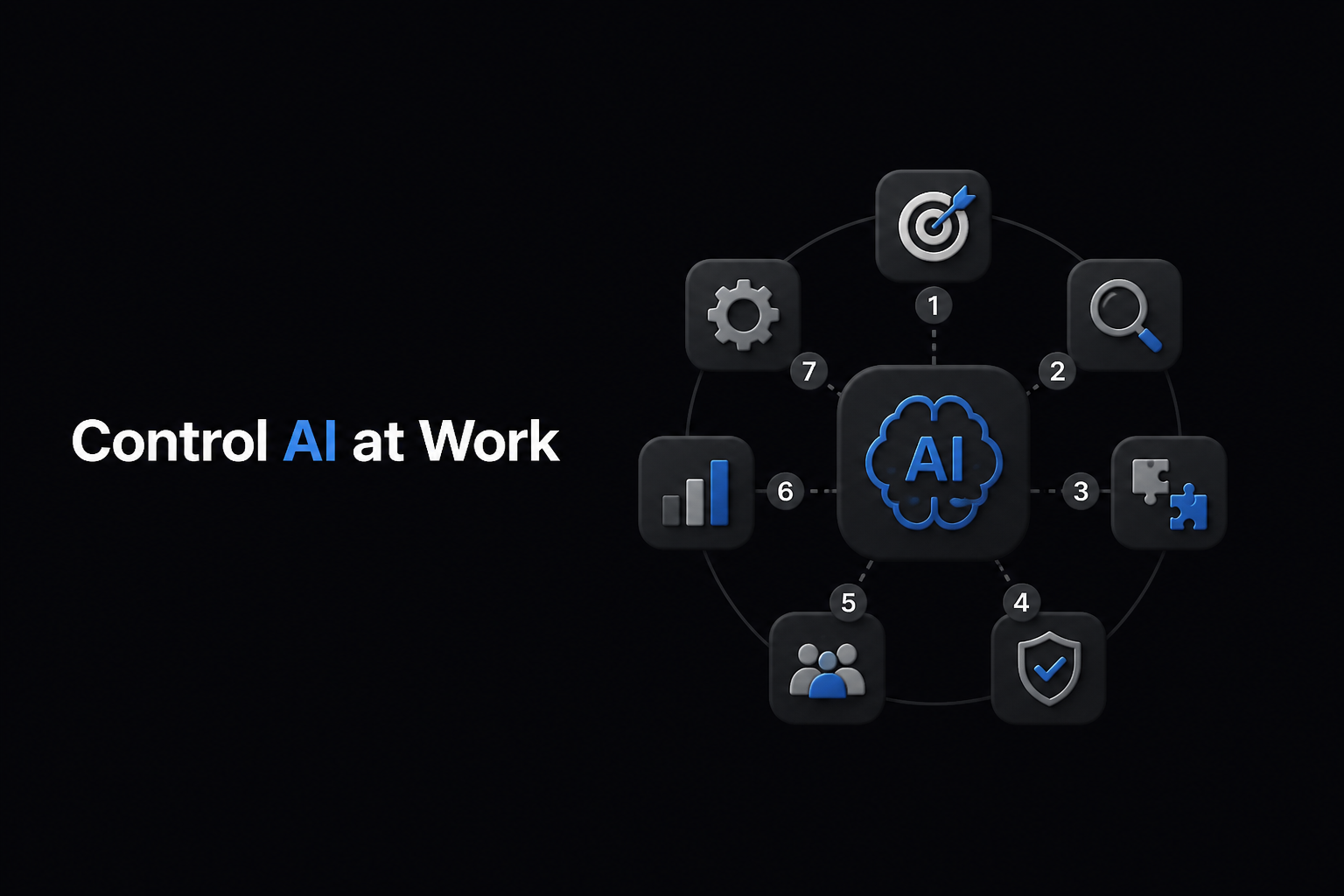
- Define specific AI adoption goals aligned with business needs.
- Establish governance policies to regulate AI usage.
- Select AI tools that fit your business system and team.
- Train teams and include human review to control AI work quality.
- Monitor and optimize AI performance continuously for growth.
1. Define Clear Objectives for AI Work
Start with a precise understanding of what business AI should achieve in your organization. Whether it’s automating repetitive marketing tasks, generating creative content, or analyzing customer data, setting measurable goals guides AI tool selection and adoption. Clear objectives prevent scope creep and help control AI at work by aligning it with business priorities.
2. Establish Governance Policies for AI Usage
Control over AI work begins with governance. Create policies that define who can access which AI tools, data privacy rules, and approval processes before AI-generated content or decisions are finalized. This safeguards your business system and ensures compliance with regulations while empowering teams responsibly.
3. Evaluate and Select AI Tools Wisely
Not all AI tools fit all business needs. Evaluate tools like Claude AI automation for workflow scalability or free AI solutions for budget-conscious teams. Prioritize solutions that integrate well into your existing business system and provide transparency in AI decision-making. Avoid tool sprawl by consolidating AI workspaces where possible.
| AI Tool Type | Benefits | Considerations |
|---|---|---|
| Claude AI Automation | Scalable, controllable workflows | Requires setup and training |
| Free AI Tools | Cost-effective experimentation | Limited features and support |
| Integrated Business AI Systems | Unified control and reporting | May require subscription |
4. Train Teams on AI Workflows and Risks
Effective ai adoption depends on user confidence and understanding. Train your teams on how to use AI tools properly, what to expect from AI outputs, and how to identify errors or biases. Awareness of AI limitations helps maintain quality and controls over the AI work produced.
5. Incorporate Human Review in AI Processes
AI tools excel at speed and volume but lack human judgment. Build workflows where AI-generated content or decisions undergo human approval before publishing or execution. This hybrid approach balances automation with accuracy, reducing costly mistakes and maintaining brand integrity.
6. Monitor AI Performance and Compliance Continuously
Set up monitoring to track AI tool effectiveness, user activity, and compliance with governance policies. Use dashboards or reports to spot anomalies or areas for improvement. Continuous oversight ensures that AI adoption does not drift away from business goals or ethical standards.
7. Optimize and Scale AI Integration Over Time
AI adoption is iterative. Collect feedback, analyze results, and refine your business system’s AI integration regularly. Scaling AI tools like Claude AI automation can be done gradually, ensuring control measures mature alongside AI capabilities and organizational needs.
FAQ
What is the difference between business AI and work AI?
Business AI refers to artificial intelligence applied broadly across business functions, while work AI focuses on specific tasks or workflows within teams, such as marketing or content creation.
Can free AI tools be sufficient for business AI adoption?
Free AI tools can be useful for experimentation or small tasks but often lack scalability and control features needed for enterprise-level adoption.
How does Claude AI automation help control AI at work?
Claude AI automation offers customizable workflows and centralized management, enabling businesses to automate tasks while maintaining oversight and compliance.
What are common pitfalls in AI adoption?
Pitfalls include lack of clear goals, tool sprawl, insufficient training, ignoring governance, and failing to include human review.
How does DIMA support AI control in marketing teams?
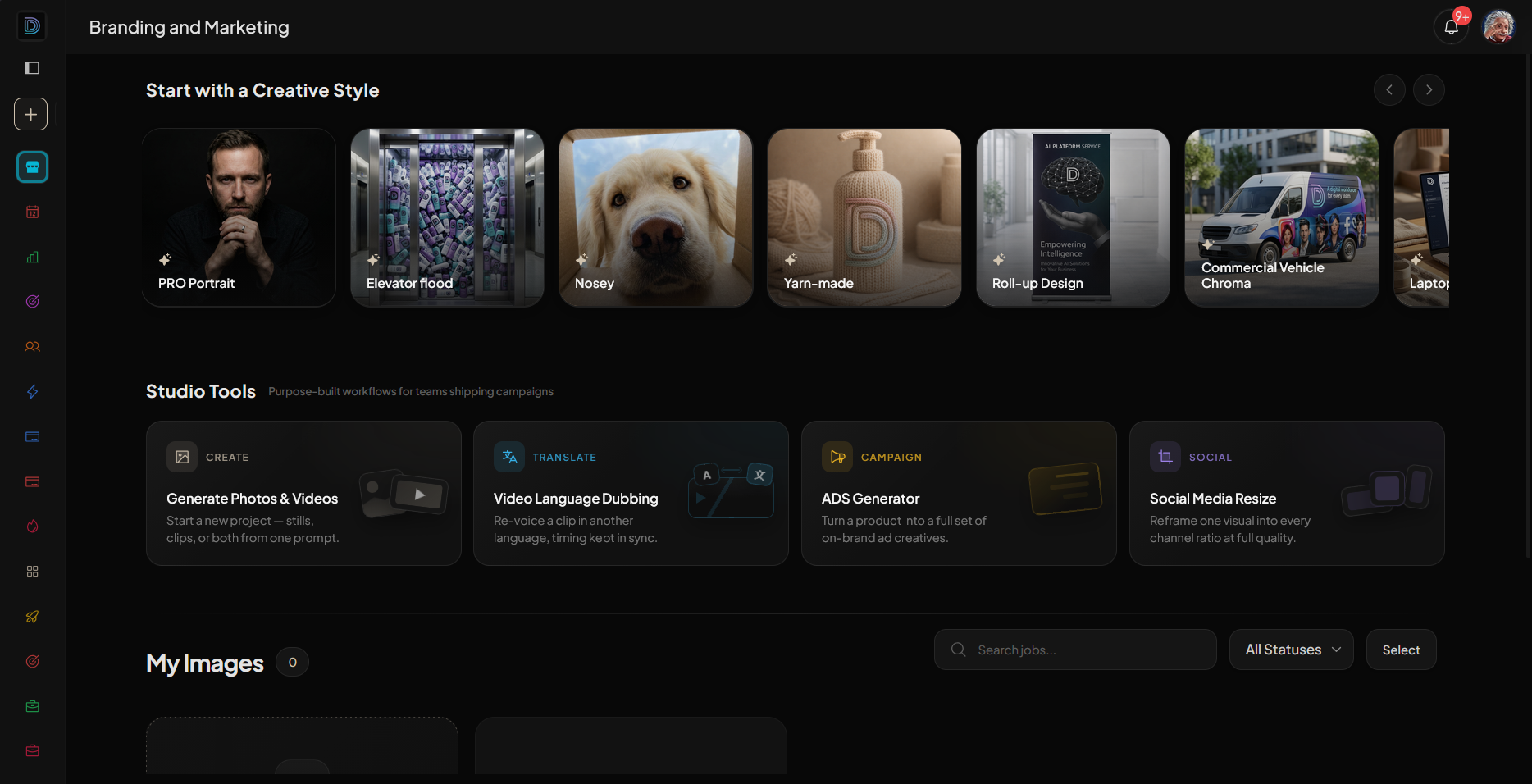
DIMA provides an all-in-one AI workspace combining multi-model AI tools with human approval layers, workflow automation, and business system integration.
Conclusion
Start controlling AI in your workflows today with a trial of DIMA’s all-in-one AI workspace designed for marketing and business teams to adopt AI confidently and effectively.
 DIMA
DIMA