

How to Control Business AI Risks While Encouraging Smart AI Adoption
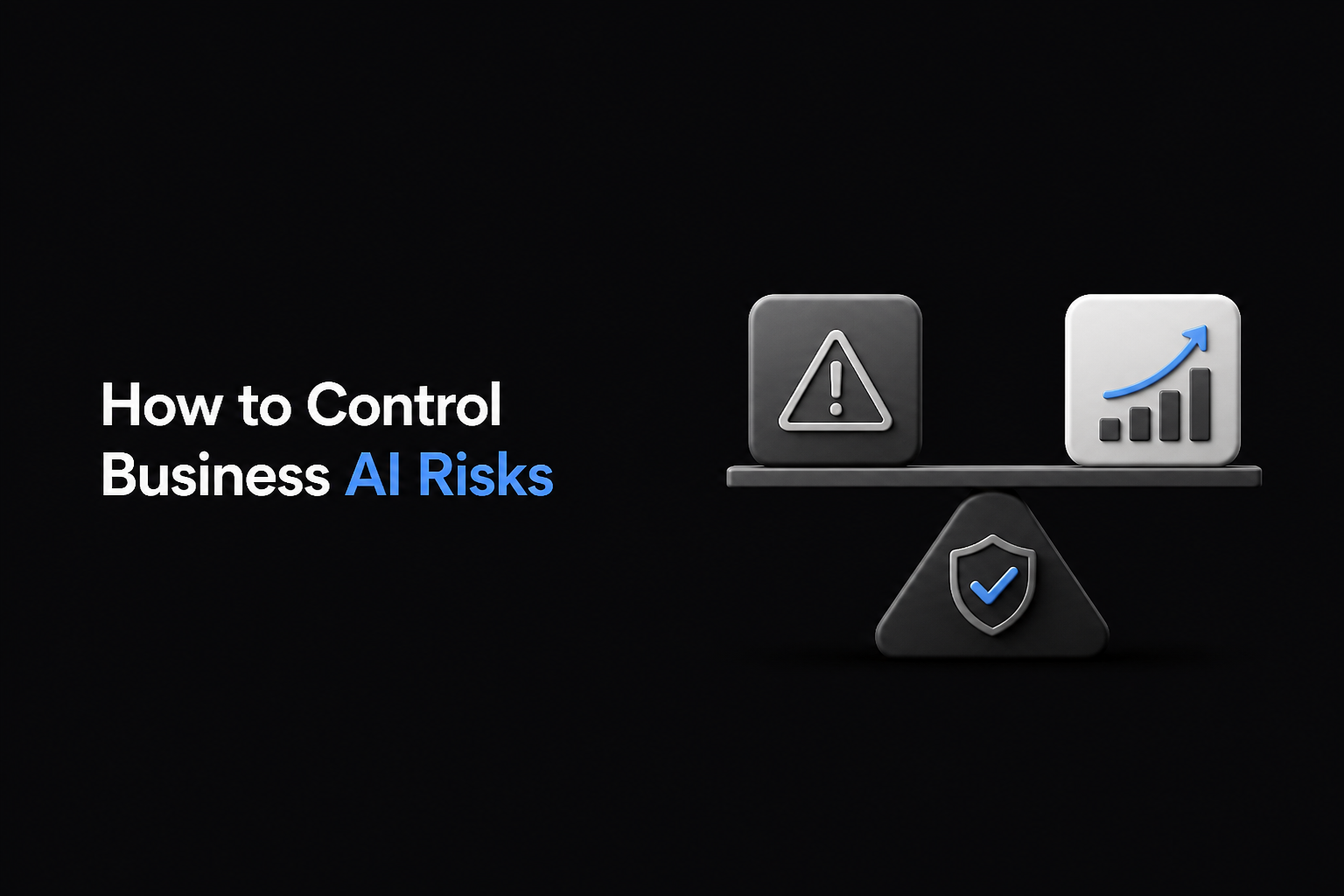
Balancing risk control with effective AI adoption is a top challenge for businesses integrating AI tools into their workflows. Without proper controls, AI work can introduce security, compliance, and operational risks that slow adoption and reduce ROI. On the other hand, overly restrictive policies may stifle innovation and frustrate teams eager to leverage free AI and automation capabilities.
This guide offers practical approaches for managing business AI risks while fostering a culture of smart AI adoption. You will learn how to implement safeguards for your business system, select the right AI tools, and maintain control over AI workflows — including leveraging advanced options like Claude AI automation — so your AI work supports growth without exposing your company to unnecessary threats.
Key Takeaways
- Identify and prioritize business AI risks that impact security, compliance, and data integrity.
- Balance open access to free AI tools with controls that protect your business system.
- Use workflow oversight and approval layers to manage AI work without bottlenecks.
- Implement Claude AI automation and other tools to scale while maintaining control.
- Educate teams on responsible AI usage to enhance adoption and reduce misuse.
- A clear understanding of AI-specific risks
- Controlled access to free and premium AI tools
- Workflow oversight with human approvals
- Leveraging advanced automation like Claude AI automation
- Training teams on responsible AI use
Understanding Business AI Risks
The first step to controlling AI risks is recognizing the types your business faces. Common risks include data leaks, biased or incorrect AI outputs, unauthorized access to AI tools, and compliance violations. For example, using free AI without vetting data inputs can inadvertently expose sensitive information.
Establish a risk register specific to AI adoption that catalogs potential threats and their impact on your business system. This provides a clear framework to prioritize which controls are essential and which can be relaxed to enable innovation.
Balancing Free AI Access With Control
Free AI tools accelerate AI adoption by lowering entry barriers. However, unlimited free AI access can lead to fragmented data, inconsistent outputs, or security gaps.
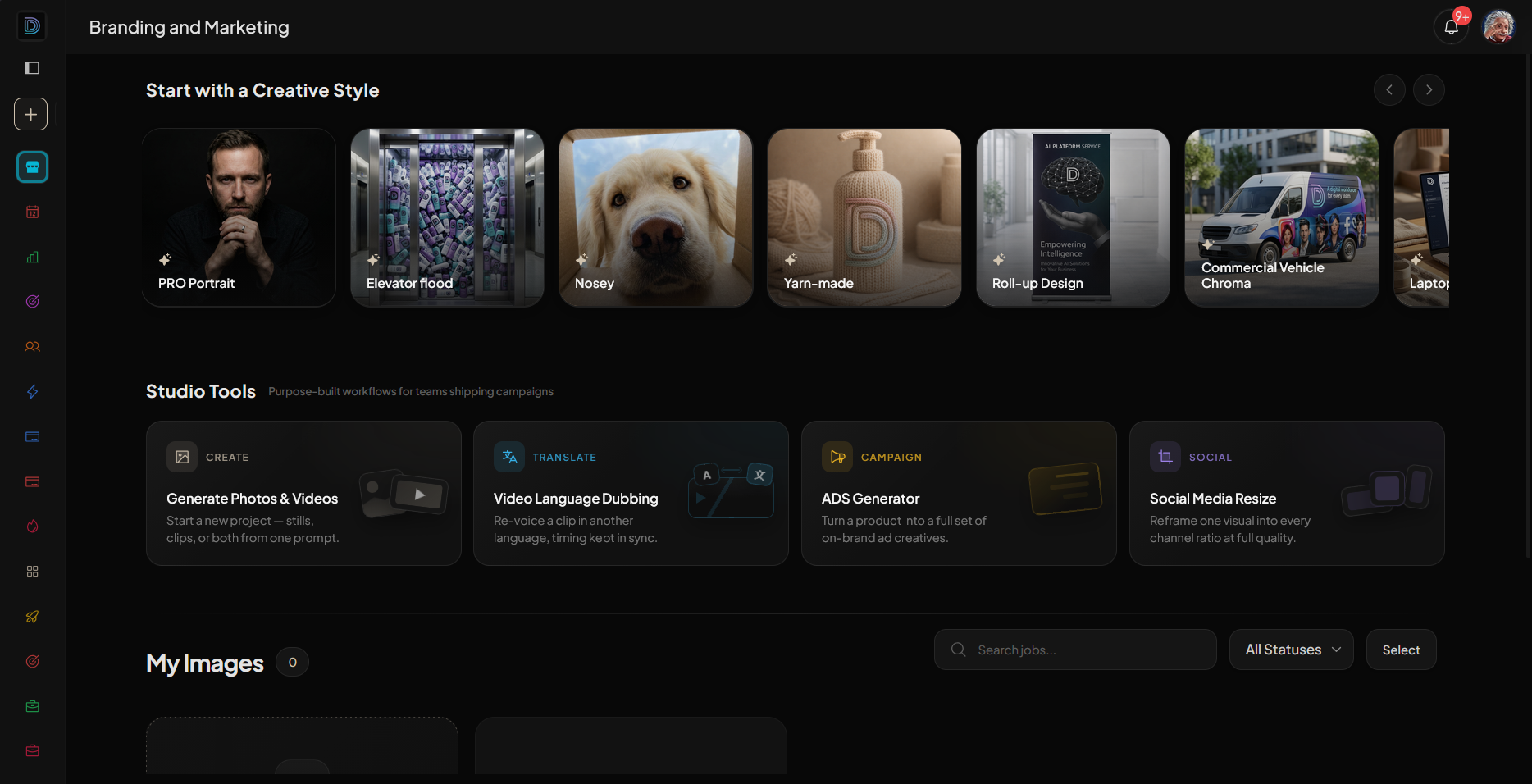
A practical approach is to create controlled environments where employees can experiment with free AI under supervision. Use centralized AI workspaces—such as those offered by DIMA—to monitor usage, enforce data policies, and integrate AI tools securely into your workflows.
Workflow Oversight to Manage AI Work
Controlling AI work doesn’t mean blocking it; instead, implement oversight mechanisms that maintain agility. For instance, approval stages before publishing AI-generated content ensure quality and compliance without slowing the entire process.
Tools like Claude AI automation enable setting up automated workflows that include checkpoints and human reviews, making it easier to scale AI work while preserving control.
| Control Aspect | Description | Benefit |
|---|---|---|
| Access Controls | Limit AI tool permission based on roles | Reduces unauthorized AI use |
| Data Governance | Monitor and restrict data sent to AI tools | Prevents sensitive data exposure |
| Output Review | Human approval before AI output is finalized | Ensures accuracy and compliance |
| Audit Logs | Track AI tool usage and decisions | Supports accountability |
Leveraging Claude AI Automation for Risk Control
Claude AI automation offers advanced features tailored to businesses needing fine-grained control over AI workflows. It supports multi-step automation with embedded compliance checks and customizable access controls.
By integrating Claude AI automation into your business system, you can delegate routine AI tasks while maintaining governance, ensuring that AI adoption grows without sacrificing security or operational integrity.
Training Teams for Responsible AI Use
Human factors are key to controlling AI risks. Equip teams with clear guidelines on when and how to use AI tools, what data is off-limits, and how to interpret AI outputs critically.
Regular training sessions and accessible documentation encourage responsible use, reduce misuse of free AI, and help teams integrate AI work effectively into their daily routines.
FAQ
How can I start controlling AI risks without halting AI adoption?
Begin by mapping AI risks and prioritizing controls that protect sensitive data and compliance. Implement oversight workflows and use centralized AI workspaces to monitor AI tool usage while allowing teams some freedom to innovate.
What makes Claude AI automation suitable for risk management?
Claude AI automation provides customizable workflow controls, role-based access, and audit capabilities that help businesses automate AI tasks securely and compliantly.
Can free AI tools be safely used in business workflows?
Yes, if managed properly through controlled environments, data governance policies, and supervision. Integrating free AI tools within a business system that enforces controls is essential.
How do I ensure AI outputs are reliable and compliant?
Implement human review stages before publishing AI-generated content and set up automated compliance checks within AI workflows.
What role does team training play in AI risk control?
Training ensures users understand risks and best practices, reducing accidental misuse and increasing adoption success.
Conclusion
Balancing business AI risks with smart AI adoption requires:
Start managing your AI adoption confidently by exploring how DIMA’s all-in-one AI workspace can help you control AI work effectively. Sign up for a trial or demo to see practical risk controls in action and accelerate your business AI adoption safely.
 DIMA
DIMA