



Conversational AI Chatbot Technology Transforms Business Operations in 2026
The conversational AI chatbot has emerged as one of the most transformative technologies reshaping how businesses interact with customers and streamline operations. No longer a futuristic concept, these intelligent systems are now powering millions of customer interactions daily, from handling complex inquiries to driving sales conversions across virtually every industry.
The numbers tell a compelling story. According to Grand View Research's latest market analysis, the global chatbot market reached USD 7.76 billion in 2024 and is projected to surge to USD 27.29 billion by 2030, representing a compound annual growth rate of 23.3%. For business leaders evaluating their digital transformation strategies, understanding how conversational AI chatbots work—and how they can drive tangible ROI—has become essential.
Key Takeaways
-
Market growth is explosive: The conversational AI chatbot market is expanding at a 23.3% CAGR through 2030, signaling massive enterprise adoption and technological maturation.
-
AI skills command premium wages: Workers with AI capabilities earn a 56% wage premium compared to those without, reflecting the growing business value of conversational AI expertise.
-
Customer expectations are shifting: More than two-thirds of CX organizations agree that AI can help deliver warm, human-like service interactions that build customer loyalty.
-
Automation delivers real savings: Companies deploying conversational AI chatbots report significant cost reductions, with some organizations saving over $1 million annually through intelligent automation.
What Makes Conversational AI Chatbots Different from Traditional Bots
The distinction between a basic chatbot and a conversational AI chatbot lies in sophistication and capability. Traditional chatbots operate on rigid decision trees, requiring users to follow predetermined paths and select from limited menu options. A conversational AI chatbot, in contrast, leverages advanced technologies including natural language processing (NLP), machine learning, and increasingly, large language models (LLMs) to understand context, intent, and nuance in human communication.
According to IBM's research on chatbot technology, modern AI chatbots use natural language understanding (NLU) to discern meaning from open-ended user input, overcoming challenges from typos to translation issues. These systems then map that meaning to specific user intents and formulate contextually appropriate responses.

The Generative AI Revolution
The emergence of generative AI has fundamentally expanded what conversational AI chatbots can accomplish. Rather than simply retrieving pre-written responses, these systems can now generate original content, summarize complex information, and adapt their communication style to match individual users.
"85% of executives say generative AI will be interacting directly with customers in the next two years," according to IBM's CEO's Guide to Generative AI.
This shift means businesses no longer need to anticipate every possible customer question. A well-implemented conversational AI chatbot can draw from an organization's knowledge base to handle novel inquiries with accuracy and relevance.
Virtual Agents: The Next Evolution
Beyond basic chatbots, virtual agents represent the cutting edge of conversational AI. These systems combine dialogue capabilities with robotic process automation (RPA), enabling them to not only converse but also take direct action—processing refunds, updating account information, or scheduling appointments without human intervention.
Why Business Leaders Are Prioritizing Conversational AI Investment
The business case for conversational AI chatbots extends far beyond cost reduction, though the financial benefits remain compelling. Organizations are discovering that these systems can simultaneously improve customer satisfaction, boost agent productivity, and unlock valuable operational insights.
Cost Efficiency and Scalability
One of the most immediate advantages of deploying a conversational AI chatbot is the ability to handle high volumes of customer interactions without proportional increases in staffing costs. According to Zendesk's research on AI customer service, AI agents can automate up to 80 percent of customer interactions, freeing human agents to focus on complex, high-value work.
The scalability factor is particularly valuable during peak demand periods. Unlike human teams that require hiring, training, and scheduling adjustments, conversational AI chatbots can instantly scale to meet surging inquiry volumes—whether during holiday shopping seasons, product launches, or unexpected crisis situations.
Enhanced Customer Experience
Today's consumers expect immediate, personalized service across every channel. A conversational AI chatbot delivers 24/7 availability, eliminating wait times that frustrate customers and damage brand perception.
Real-world results validate this approach. Unity, the leading development platform for interactive 3D content, deployed an AI agent that deflected 8,000 support tickets, resulting in $1.3 million in savings while maintaining customer satisfaction levels.
Key customer experience benefits include:
-
Instant response times: No hold queues or callback scheduling
-
Consistent service quality: Every interaction follows best practices
-
Multilingual support: Serve global audiences without multilingual staff
-
Personalized interactions: AI remembers context and customer history
-
Seamless escalation: Smooth handoffs to human agents when needed
Agent Productivity and Satisfaction
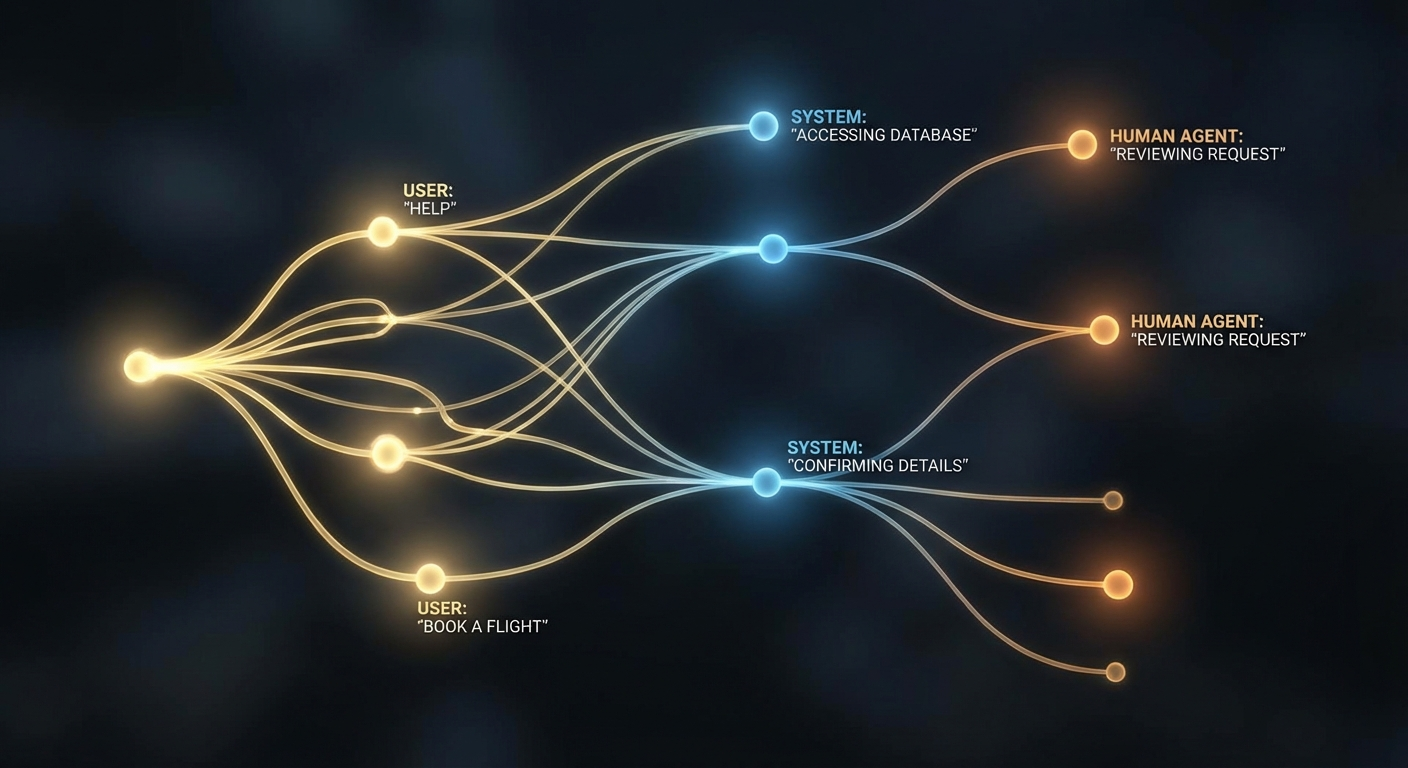
Conversational AI chatbots don't replace human agents—they enhance them. By handling routine inquiries and gathering preliminary information, these systems allow human agents to focus on complex problem-solving that requires empathy, creativity, and judgment.
AI-powered tools also guide agents through interactions in real-time, suggesting responses and surfacing relevant information. This support is particularly valuable for new employees, accelerating onboarding and reducing training costs.
Industries Leading Conversational AI Adoption
While conversational AI chatbots are gaining traction across sectors, certain industries are leading adoption due to high customer interaction volumes and clear ROI opportunities.
Financial Services and Banking
Banks and financial institutions use conversational AI chatbots for account inquiries, transaction support, and fraud detection. The technology enables secure, compliant interactions while reducing call center volumes.
E-Commerce and Retail
Online retailers deploy conversational AI for product recommendations, order tracking, and returns processing. The Grand View Research report identifies e-commerce as one of the industries benefitting most from chatbot innovations, with mobile applications serving as the dominant deployment channel.
Healthcare
Healthcare organizations use conversational AI chatbots for appointment scheduling, symptom checking, and patient education. These applications improve access while allowing clinical staff to focus on direct patient care.
Enterprise Operations
Beyond customer-facing applications, organizations are deploying conversational AI chatbots for internal operations—handling IT help desk requests, HR inquiries, and employee onboarding. Integration with enterprise systems like Microsoft Teams enables chatbots to function as productivity hubs where teams collaborate and access information.
Implementing Conversational AI: What Business Leaders Should Know
Successfully deploying a conversational AI chatbot requires careful planning, appropriate technology selection, and realistic expectations about capabilities and limitations.
Start with Clear Objectives
Before evaluating platforms, define what success looks like. Are you primarily focused on cost reduction, customer satisfaction improvement, or agent productivity? Different objectives may lead to different implementation approaches.
Choose the Right Technology Stack
The market offers numerous conversational AI platforms with varying capabilities. Enterprise-grade solutions provide:
-
Pre-trained models: Faster deployment with industry-specific knowledge
-
Integration capabilities: Connection to CRM, ERP, and other business systems
-
Analytics and insights: Performance tracking and optimization tools
-
Security and compliance: Data protection appropriate for your industry
Plan for Human-AI Collaboration
The most effective implementations treat conversational AI chatbots as team members rather than replacements. Design workflows that leverage AI strengths while ensuring seamless escalation to human agents for situations requiring judgment, empathy, or authority.
"With AI purpose-built for customer service, you can resolve more issues through automation, enhance agent productivity, and provide support with confidence," notes Tom Eggemeier, CEO of Zendesk.
Measure and Optimize Continuously
Conversational AI chatbots improve through exposure to real interactions. Establish feedback loops that capture performance data, identify failure points, and inform ongoing optimization. Machine learning capabilities enable these systems to become more accurate over time, but only with appropriate monitoring and adjustment.
The Workforce Impact: Opportunity Amid Transformation
As conversational AI chatbots automate routine tasks, concerns about workforce displacement are natural. However, research suggests a more nuanced reality.
PwC's 2025 Global AI Jobs Barometer found that AI can make people more valuable, not less—even in highly automatable roles. The research revealed that wages are rising twice as fast in industries most exposed to AI compared to those least exposed.
The skills landscape is evolving rapidly. Skills for AI-exposed jobs are changing 66% faster than for other positions. For employees, this underscores the importance of developing AI-related competencies. For employers, it highlights the need for training investments and thoughtful change management.

What's Next: The Future of Conversational AI Chatbots
Looking ahead, several trends will shape conversational AI chatbot evolution:
-
Deeper personalization: AI will leverage broader data to deliver increasingly tailored interactions
-
Proactive engagement: Chatbots will initiate conversations based on predicted customer needs
-
Multimodal capabilities: Voice, video, and visual elements will enrich conversational experiences
-
Emotional intelligence: Advanced sentiment analysis will enable more empathetic responses
For business leaders, the question is no longer whether to adopt conversational AI chatbots, but how quickly and comprehensively to integrate them into operations and customer experiences.
Ready to explore how conversational AI can transform your business operations? DIMA-AI specializes in helping organizations implement intelligent automation solutions that deliver measurable results while enhancing both customer and employee experiences.
Frequently Asked Questions
What is a conversational AI chatbot? A conversational AI chatbot is an intelligent software application that uses natural language processing, machine learning, and often large language models to understand and respond to human communication in a natural, context-aware manner. Unlike traditional rule-based chatbots, conversational AI can handle open-ended questions and learn from interactions over time.
How much does implementing a conversational AI chatbot cost? Implementation costs vary widely based on complexity, integration requirements, and chosen platform. Cloud-based solutions may start at a few hundred dollars monthly for basic capabilities, while enterprise deployments with custom development and extensive integrations can reach six or seven figures. Most organizations see positive ROI within 12-18 months through cost savings and efficiency gains.
Can conversational AI chatbots handle complex customer inquiries? Yes, modern conversational AI chatbots can handle increasingly sophisticated queries. They use natural language understanding to interpret intent even when questions are ambiguous or poorly phrased. For inquiries requiring human judgment or authority, well-designed systems seamlessly escalate to live agents while preserving conversation context.
Will conversational AI chatbots replace human customer service agents? Research suggests AI augments rather than replaces human workers. While chatbots handle routine inquiries, human agents focus on complex issues requiring empathy, creativity, and judgment. According to PwC research, wages are actually rising faster in AI-exposed industries, suggesting these technologies create value that benefits workers.
How long does it take to deploy a conversational AI chatbot? Deployment timelines depend on complexity and approach. Simple implementations using pre-built platforms can launch in weeks. Enterprise deployments requiring custom training, extensive integrations, and compliance review typically take three to six months. Organizations should plan for ongoing optimization beyond initial deployment.
 DIMA
DIMA

 DIMA Team