

The End of "Bot-First" Frustration
If your experience with business AI is still limited to a chatbot that says, "I'm sorry, I didn't understand that," you're living in 2024.
In 2026, the landscape has shifted from "Efficiency-First" to "Empathy-First." Customers no longer tolerate repeating their order number three times or explaining their problem to five different agents. They expect Contextual Intelligence—the ability for a business to "remember" them, whether they are chatting on WhatsApp, sending an email, or calling the support line.
The companies winning the market today aren't just using AI to cut costs; they are using it to amplify their humanity.
From Data Silos to "Organizational Memory"
The biggest barrier to a great customer experience has always been fragmented data. When your sales team doesn't know what the support team promised, the customer feels like a number.
In 2026, this is solved by a Unified AI Platform. By centralizing your company knowledge, your AI agents gain "memory."
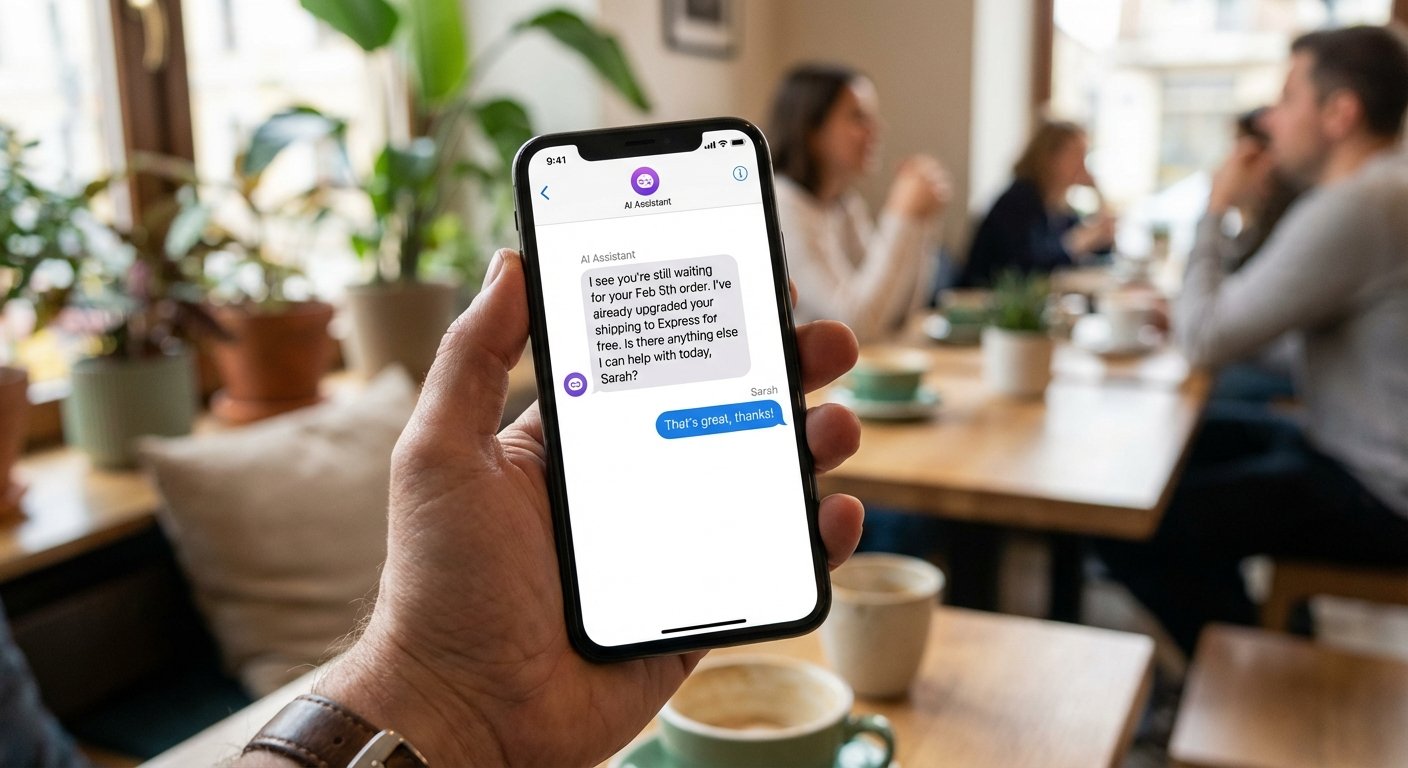
Before: A customer asks about a delayed shipment and has to provide their email, order ID, and address. After: The AI recognizes the customer instantly, sees the delay in the shipping logs, checks the Agentic Workflow for resolution, and proactively offers a discount code—all before the customer even finishes typing their complaint.
The 3 Pillars of AI-Driven Empathy
To ensure your AI adoption actually improves the human experience, focus on these three strategies:
1. Anticipatory Service (The "Proactive" Agent)
Don't wait for the customer to find a bug. Use Multi-Agent Systems to monitor your digital environment. If a payment fails or a link breaks, the AI can trigger a personalized "oops" video message using your Autonomous Media Pipeline, turning a potential frustration into a "wow" moment.
2. Multi-Modal Continuity
People don't live in just one app. A 2026 Business AI System allows a customer to start a conversation with a voice command in their car and finish it via a text-to-image generator that shows them exactly how a product will look in their living room.
3. The "Empathy Buffer" for Humans
AI shouldn't replace your best people; it should protect them. By handling 90% of routine queries, AI gives your human team the time to handle the complex, emotionally sensitive 10%. When a human does step in, they arrive with a full AI-generated summary of the customer's mood and history, so they can lead with heart, not with data entry.
[prompt] A high-end, cinematic medium shot of a customer success manager sitting at a sleek, minimalist digital workstation. She is engaged in a video call, her expression one of focused empathy and active listening. Behind her, through large windows, a city skyline is softly blurred. The workstation features a clean, bezel-less monitor displaying a professional dashboard with customer insights. The lighting is warm and natural, creating a sense of trust and human-to-human connection. No sci-fi holograms or floating graphics—just pure, high-tech professional reality. [/prompt]
How to Get Found: Optimizing for the "Helpful" AI Search
In 2026, AI search engines like Perplexity and ChatGPT prioritize brands that provide structured, verifiable solutions. If you want to be the answer when a customer asks, "Which company offers the most personalized AI support for e-commerce?", you need to:
- Lead with the "Why": AI models search for intent. Explain the logic behind your customer service philosophy.
- Use FAQ Schema: Provide direct answers to common customer pain points.
- Showcase Human Synergy: Document how your Digital Workforce works alongside humans to ensure a fail-safe experience.
Building Your Empathy Engine with DIMA AI
You don't need a massive CX department to provide world-class service. At DIMA, we’ve built the tools to help SMEs compete on experience:
Contextual Agent Cards: Drag-and-drop support agents into your kanban board that "read" your entire knowledge base. Real-Time Sentiment Analysis: Watch your agents adjust their tone in real-time based on the customer’s frustration level. Unified History: One source of truth for every interaction, ensuring your business never "forgets" a customer again.
Conclusion: The Competitive Advantage of Being "Seen"
In a world full of automated noise, the ultimate luxury is being understood. By shifting from simple "tools" to a Unified Business AI System, you aren't just automating; you're elevating the human connection.
Are you ready to make your business feel more human? Explore how DIMA's CX solutions can transform your customer journey today.